
Strategic Games
How should I decide when others also choose?
Study how choices depend on the other player's strategy. Start with zero-sum guarantees, then compare separate player objectives and sequential decisions. Poker and stochastic games extend these ideas to private information and changing states.
A suggested learning path
Follow the sequence, or jump directly to the question that interests you. Each lab opens in Guided Learning; switch to Sandbox at any time to experiment freely.
- Step 1
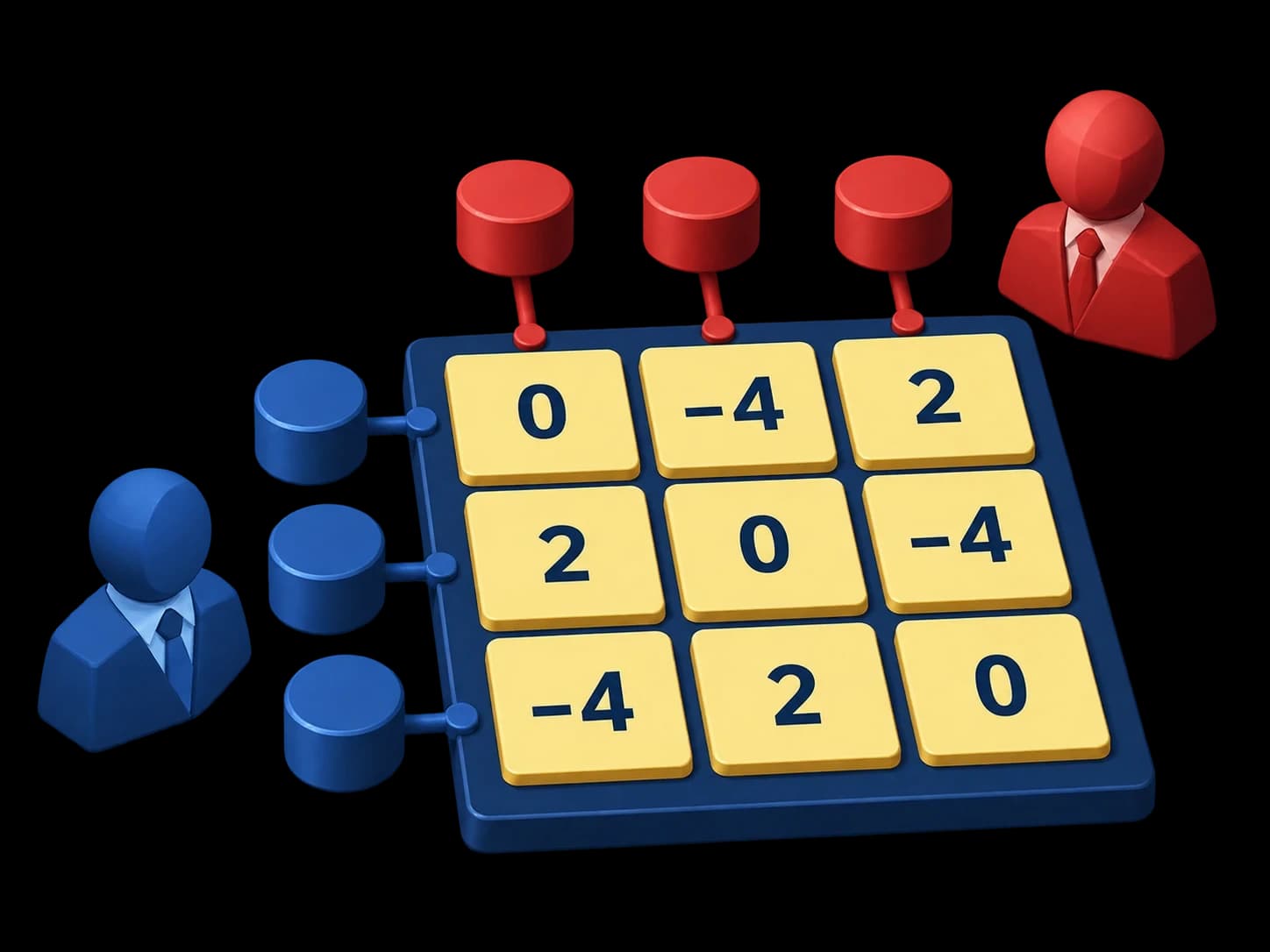
Zero-Sum Matrix Games
Understand mixed strategies, best responses and minimax guarantees.
Learning outcome: Find the value and optimal mixed strategies of a zero-sum game, then reach them through linear programming, pivoting and fictitious play.
- Level
- Intermediate
- Time
- About 20 min per method
- Concepts
- Saddle point · Mixed strategy · Minimax theorem · Linear programming
- Step 2
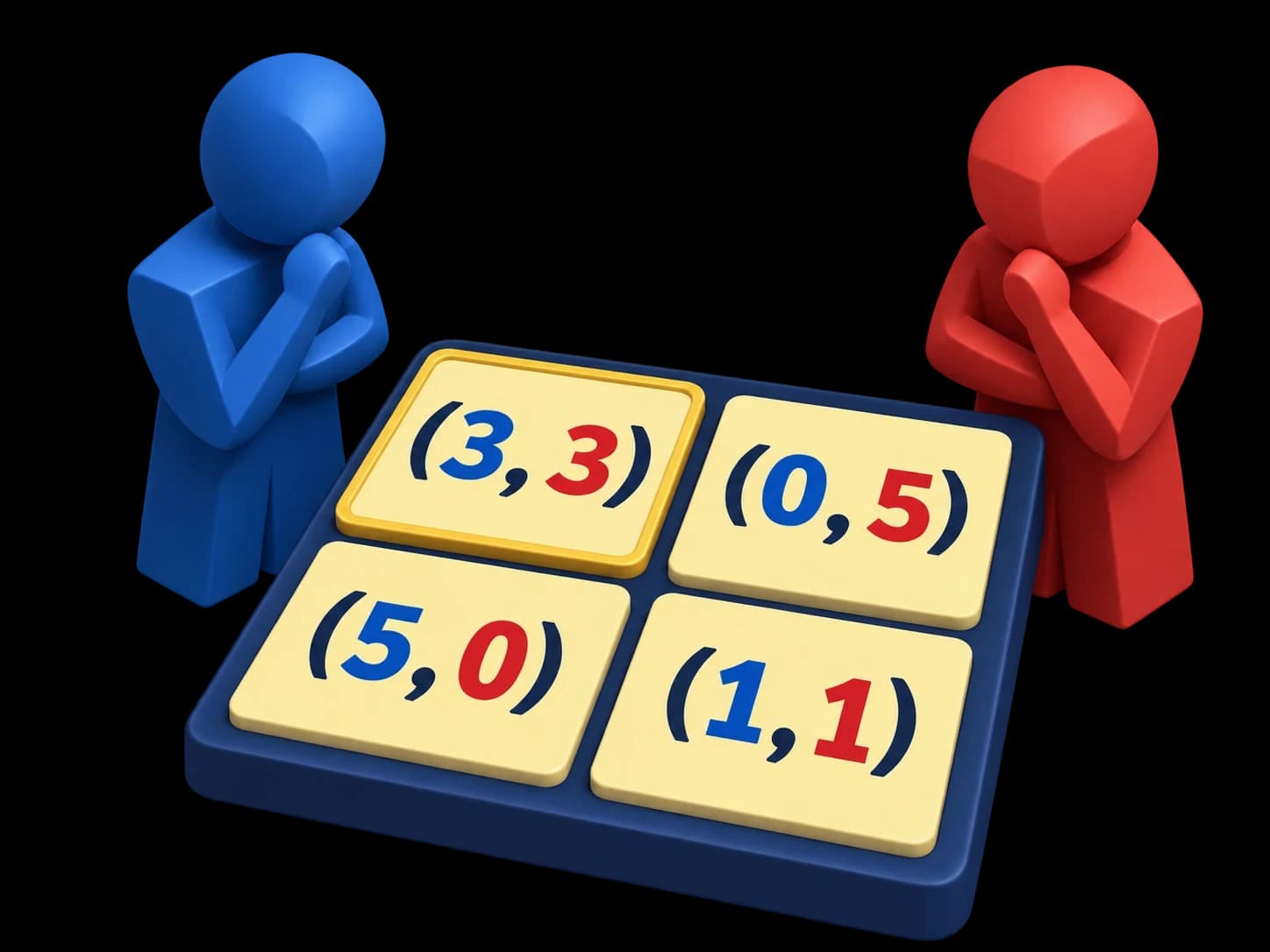
General-Sum Games
Give each player a separate payoff and study Nash equilibrium.
Learning outcome: Find the Nash equilibria of a two-player game and compare them with safety levels and dominance.
- Level
- Intermediate
- Time
- About 20 min per method
- Concepts
- Nash equilibrium · Best response · Safety level · Dominance
- Step 3
Game Trees
Represent the order of decisions and what each player knows.
Learning outcome: Build a game tree, read its information sets and solve perfect-information games by backward induction.
- Level
- Intermediate
- Time
- About 20 min per method
- Concepts
- Information sets · Backward induction · Behavioral strategies

- Step 4
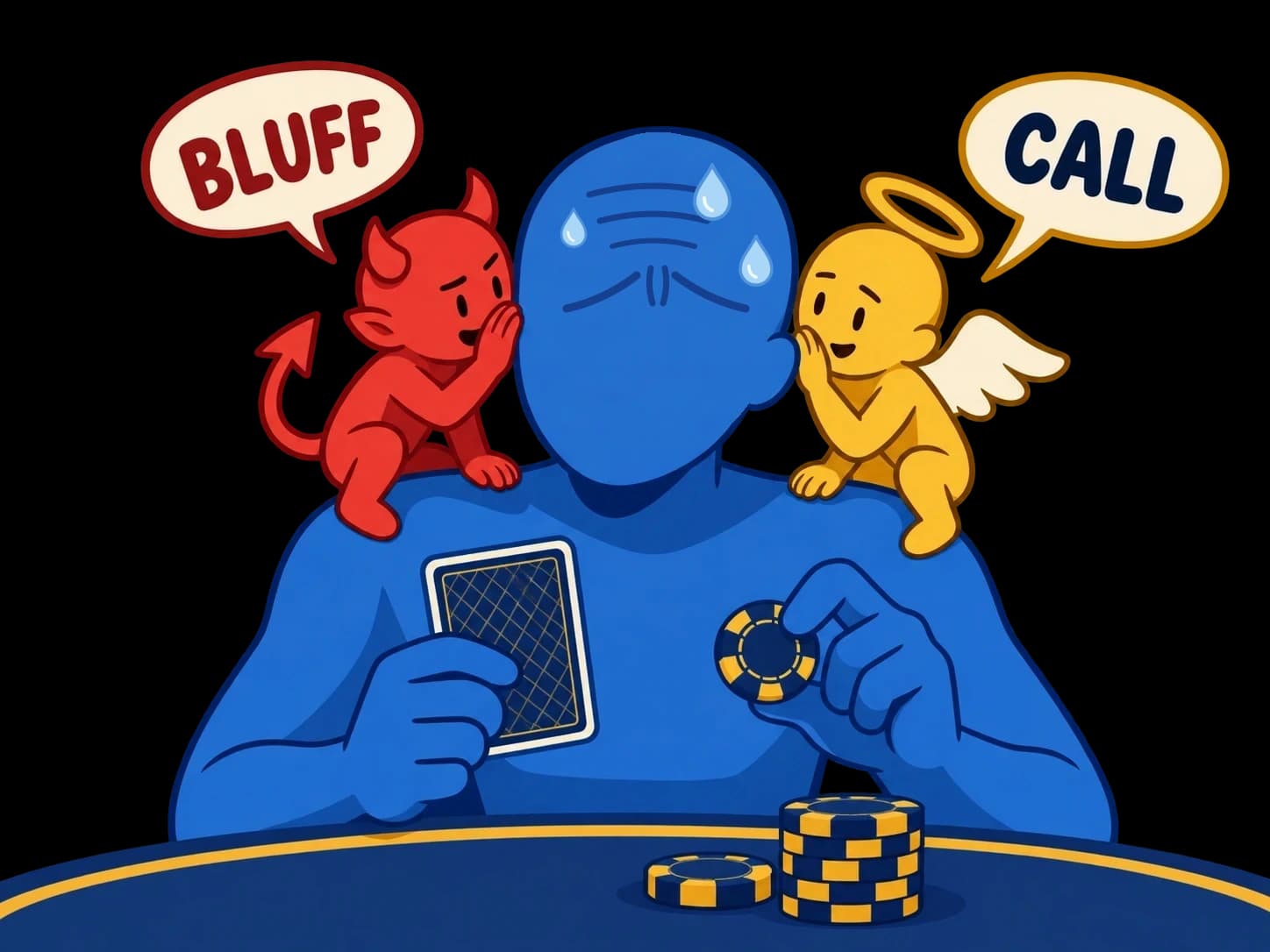
Poker Endgame
Use a small hidden-card game to understand betting and bluffing.
Learning outcome: Find a bluffing rate and a calling rate from indifference conditions.
- Level
- Intermediate
- Time
- About 15 min
- Concepts
- Hidden information · Bluffing · Indifference
- Step 5
Continuous Poker
Extend private hand strengths to a continuous interval and derive thresholds.
Learning outcome: Derive betting and calling thresholds when private hands range over an interval.
- Level
- Advanced
- Time
- About 20 min
- Concepts
- Threshold strategy · Bluffing · Indifference

- Step 6
Stochastic Game
Study decisions across states with probabilistic transitions.
Learning outcome: Compute state values with Shapley iteration and evaluate stationary policies.
- Level
- Advanced
- Time
- About 25 min
- Concepts
- State value · Shapley iteration · Stationary policy