
All Labs
Find a game or method directly, or narrow the list to a topic.
18 labs found
Take-Away
Learning outcome: Classify positions as winning or losing by working backward, then pick a winning move.
- Level
- Introductory
- Time
- About 15 min
- Concepts
- P-positions · N-positions · Backward induction
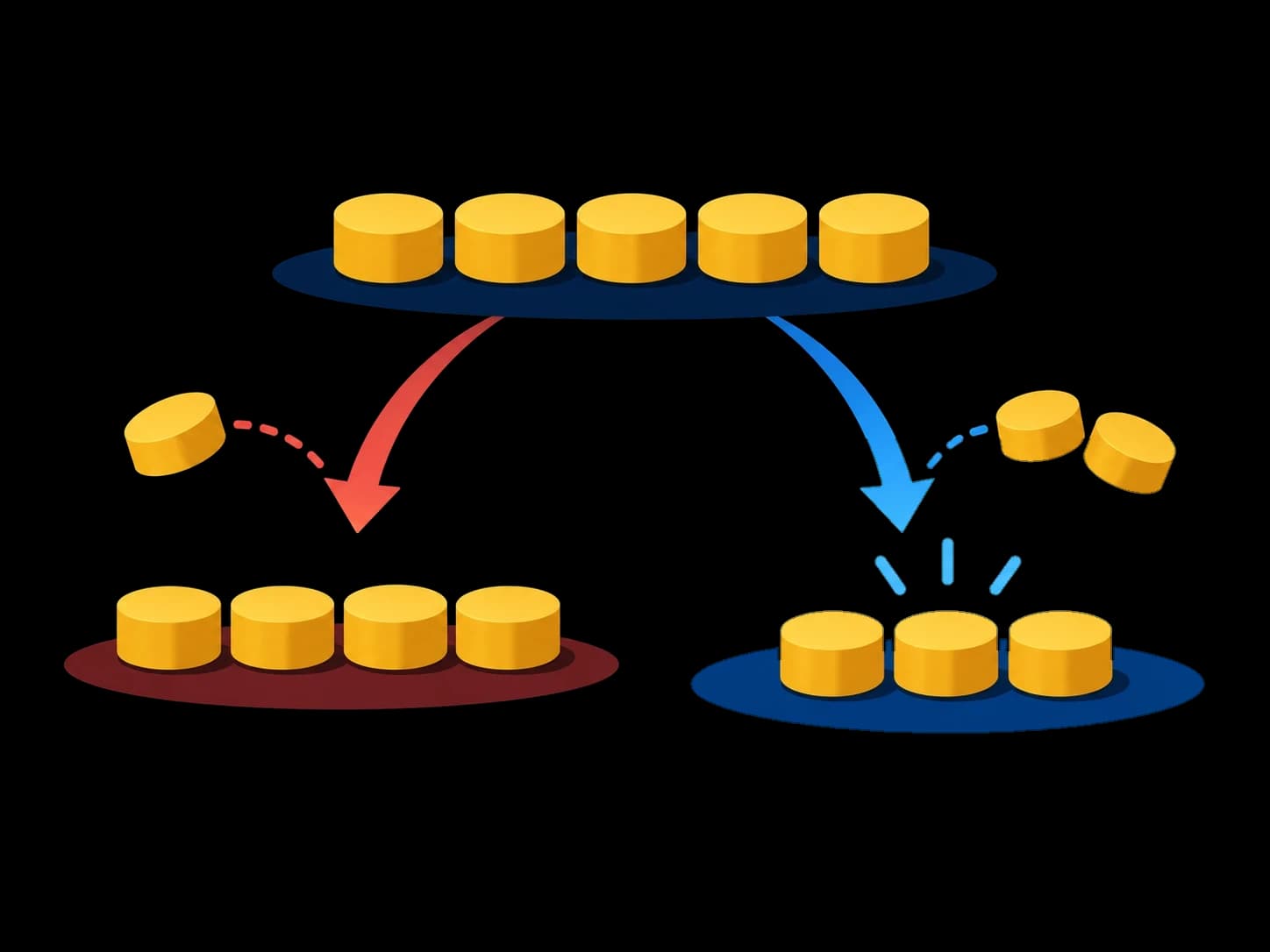
Nim
Learning outcome: Use the binary nim-sum to decide who wins a Nim position and find a winning move.
- Level
- Introductory
- Time
- About 20 min
- Concepts
- Nim-sum (XOR) · Bouton's theorem · Misère play

Graph Games
Learning outcome: Compute Sprague–Grundy values on a directed graph with the minimum-excluded rule.
- Level
- Intermediate
- Time
- About 20 min
- Concepts
- Sprague–Grundy value · mex · Followers

Sum of Games
Learning outcome: Combine the Grundy values of independent games with XOR to play their sum.
- Level
- Intermediate
- Time
- About 20 min
- Concepts
- Game sums · Sprague–Grundy theorem · Nim-sum
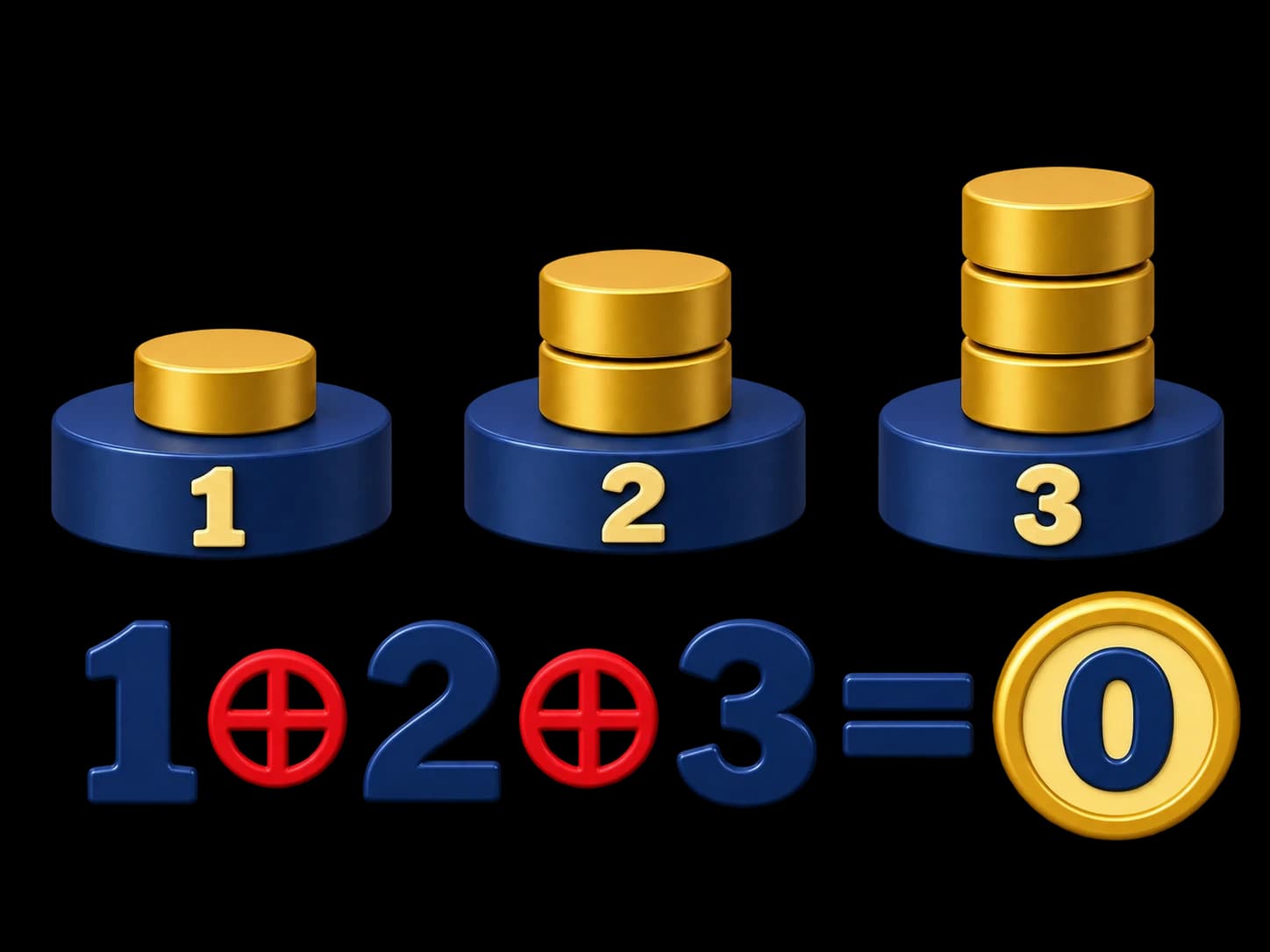
Hackenbush
Learning outcome: Replace rooted Green Hackenbush branches by equivalent Nim heaps and choose a winning cut.
- Level
- Intermediate
- Time
- About 25 min
- Concepts
- Green Hackenbush · Colon principle · Equivalent Nim heap
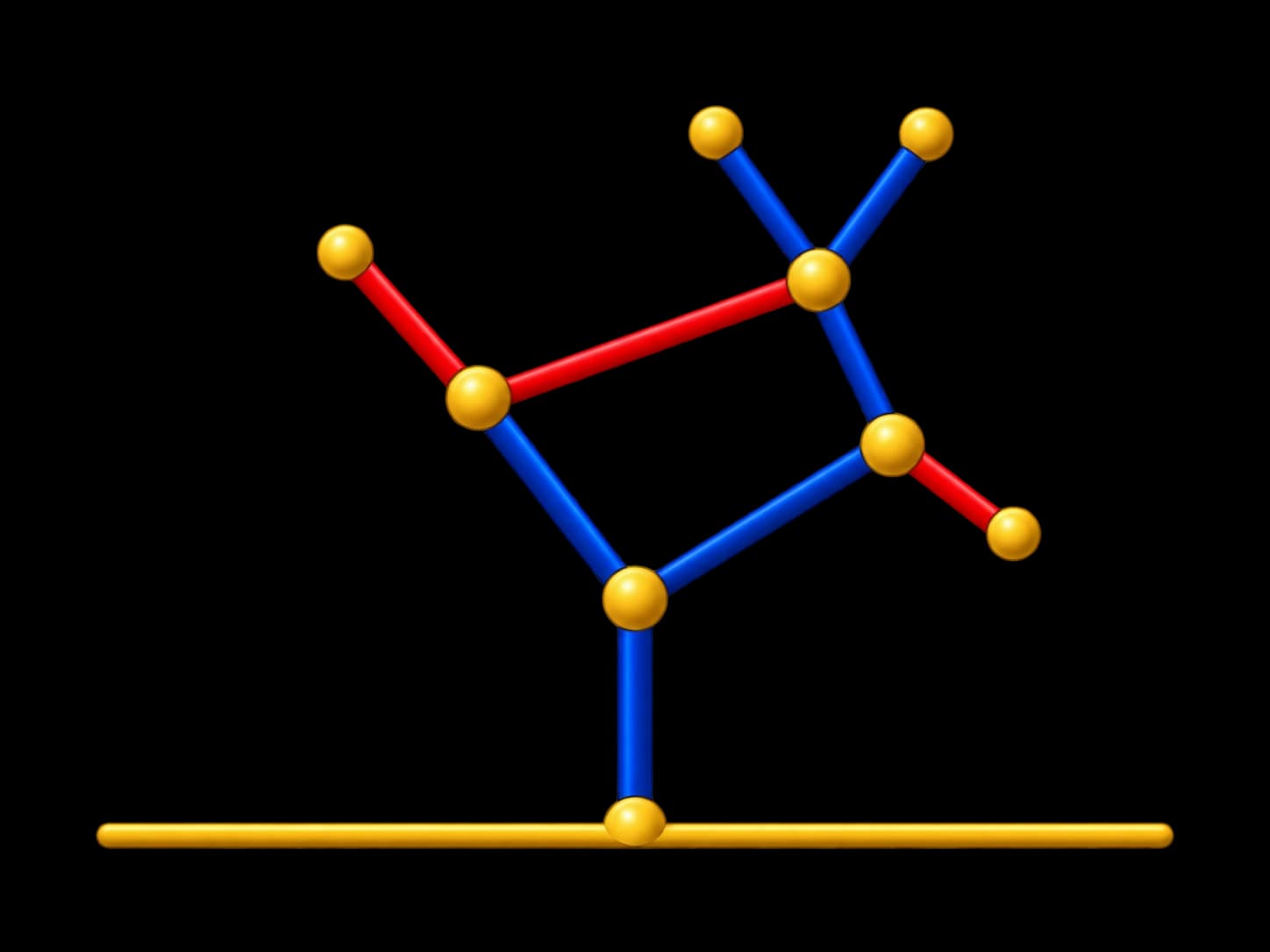
Zero-Sum Matrix Games
Methods: Solve & Play · Linear Programming · Pivot Method · Fictitious Play
Learning outcome: Find the value and optimal mixed strategies of a zero-sum game, then reach them through linear programming, pivoting and fictitious play.
- Level
- Intermediate
- Time
- About 20 min per method
- Concepts
- Saddle point · Mixed strategy · Minimax theorem · Linear programming
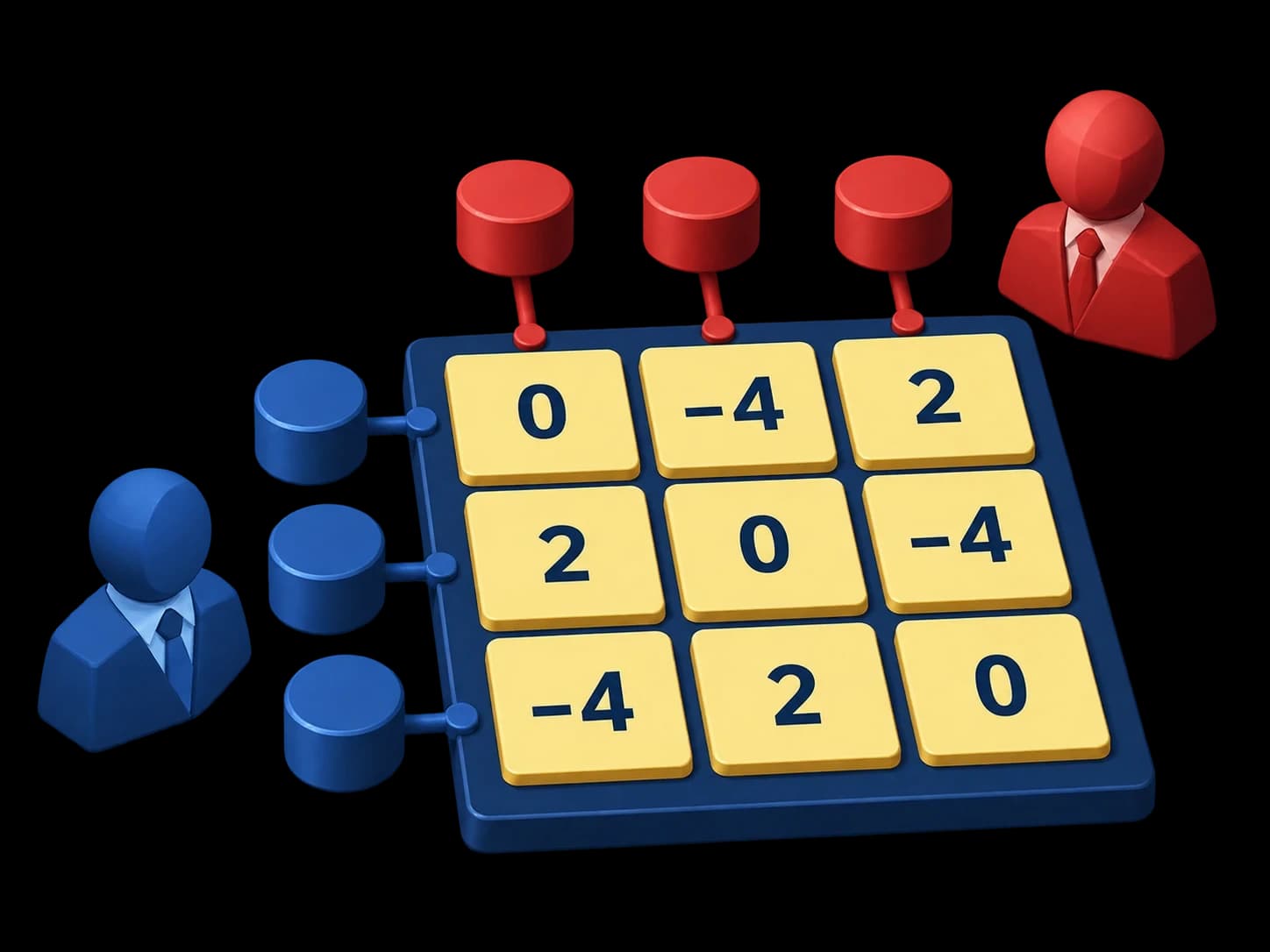
General-Sum Games
Methods: Nash Equilibria · Safety Levels · Dominance
Learning outcome: Find the Nash equilibria of a two-player game and compare them with safety levels and dominance.
- Level
- Intermediate
- Time
- About 20 min per method
- Concepts
- Nash equilibrium · Best response · Safety level · Dominance
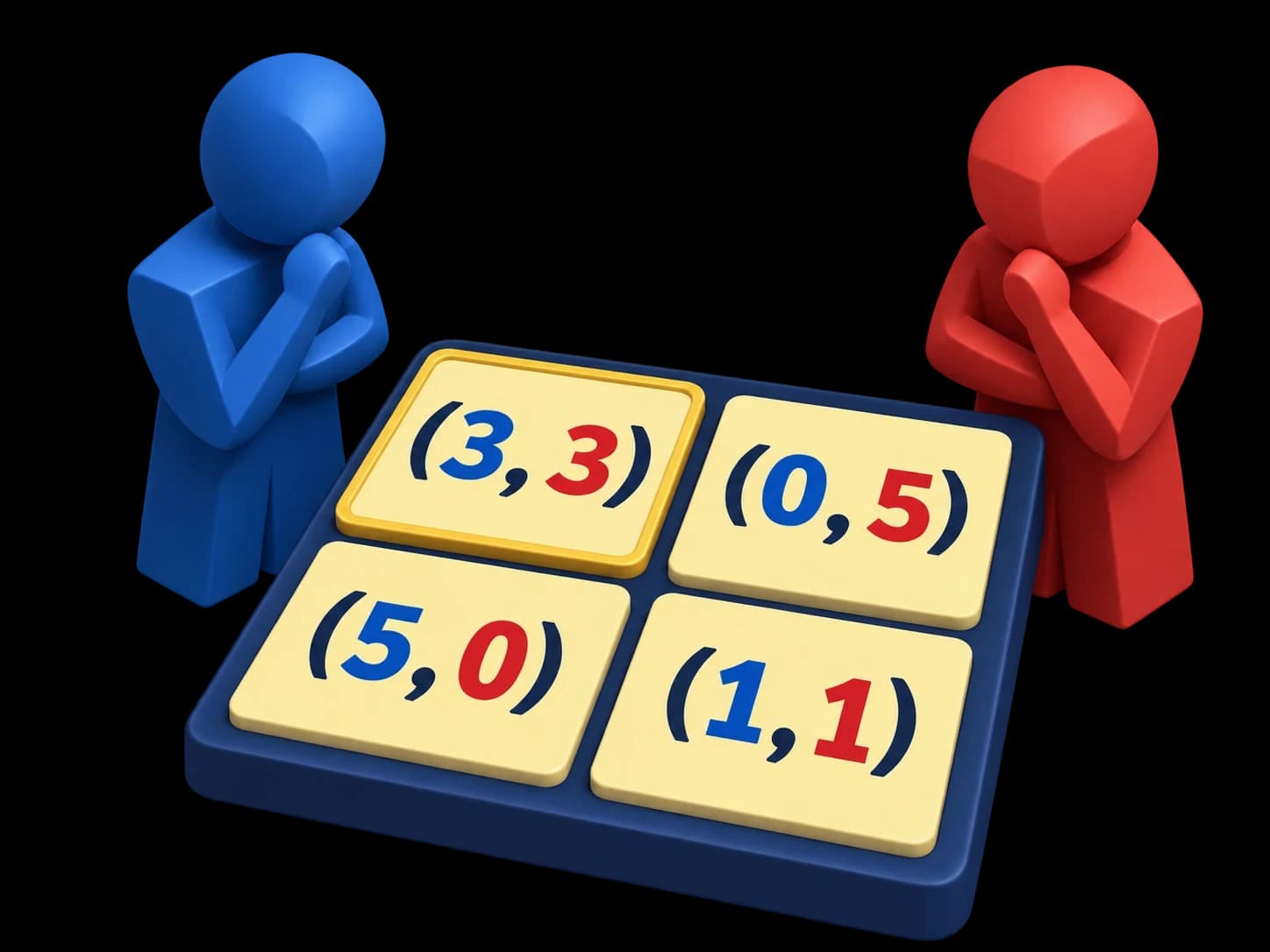
Game Trees
Methods: Tree Builder · Backward Induction · Behavioral Strategies
Learning outcome: Build a game tree, read its information sets and solve perfect-information games by backward induction.
- Level
- Intermediate
- Time
- About 20 min per method
- Concepts
- Information sets · Backward induction · Behavioral strategies

Continuous Poker
Learning outcome: Derive betting and calling thresholds when private hands range over an interval.
- Level
- Advanced
- Time
- About 20 min
- Concepts
- Threshold strategy · Bluffing · Indifference

Poker Endgame
Learning outcome: Find a bluffing rate and a calling rate from indifference conditions.
- Level
- Intermediate
- Time
- About 15 min
- Concepts
- Hidden information · Bluffing · Indifference

Stochastic Game
Learning outcome: Compute state values with Shapley iteration and evaluate stationary policies.
- Level
- Advanced
- Time
- About 25 min
- Concepts
- State value · Shapley iteration · Stationary policy

Cournot Duopoly
Learning outcome: Find each firm's best quantity and the equilibrium where the reaction curves cross.
- Level
- Intermediate
- Time
- About 20 min
- Concepts
- Reaction curve · Cournot equilibrium · Best response

Bertrand Competition
Learning outcome: Explain why identical firms undercut prices down to cost, and how differentiation keeps prices higher.
- Level
- Intermediate
- Time
- About 20 min
- Concepts
- Undercutting · Bertrand equilibrium · Product differentiation

Stackelberg Competition
Learning outcome: Solve leader–follower quantity competition by backward induction and measure the first-mover advantage.
- Level
- Intermediate
- Time
- About 20 min
- Concepts
- Commitment · Backward induction · First-mover advantage

Entry Deterrence
Learning outcome: Find the incumbent output at which entry stops paying and judge whether that threat is credible.
- Level
- Intermediate
- Time
- About 20 min
- Concepts
- Entry cost · Deterrence threshold · Commitment

Two-Player Cooperation
Methods: Feasible Payoffs · Transferable Utility · Nash Bargaining
Learning outcome: Map the feasible agreements of two players and choose one with transferable utility or Nash bargaining.
- Level
- Intermediate
- Time
- About 20 min per method
- Concepts
- Feasible set · Pareto frontier · Transferable utility · Nash bargaining

Coalitional Games
Methods: Game Builder · Imputations · Core · Shapley Value · Shapley Axioms · Alternative Formula · Nucleolus · Compare Solutions · Nucleolus Exercises
Learning outcome: Compare imputations, the core, the Shapley value and the nucleolus on one characteristic function.
- Level
- Advanced
- Time
- About 20 min per method
- Concepts
- Characteristic function · Core · Shapley value · Nucleolus

Voting Power
Learning outcome: Measure Shapley–Shubik power from pivotal voters and separate voting weight from power.
- Level
- Intermediate
- Time
- About 15 min
- Concepts
- Weighted voting · Pivotal voter · Shapley–Shubik index